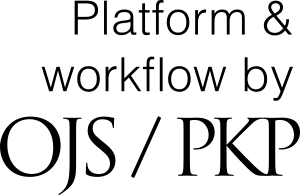
The Impact of Assigning Weights to Semantic Resources on the Identification of Criminal Suspects on Social Media
DOI:
https://doi.org/10.22491/rmct.v40i2.9271.ptKeywords:
Suspects, Social Networks, Semantic ResourcesAbstract
The identification of criminal suspects on social media has been a topic of great relevance in the analysis of this type of media. Most of the time, the methods that seek to identify these suspects use textual data made available by people on these networks (e.g. messages, comments, among others). To analyze the texts, these methods often use semantic resources such as controlled vocabularies or even simple sets composed of terms, according to the domain in question (e.g. terrorism, pedophilia, among others). The mention of one or more of these terms can raise suspicions about the people who have used them. However, some terms raise more suspicion than others. Therefore, this work seeks to investigate the impact of differentiating the level of dangerousness of the terms used by a method for identifying criminal suspects on social media and whether this can lead to better results in identifying suspects. The results obtained through experiments in the domain of pedophilia showed that differentiating the level of dangerousness of the terms provided better results in 82.5% of the experiments carried out.
Downloads
Downloads
Published
How to Cite
Issue
Section
License
A Revista Militar de Ciência e Tecnologia está licenciada:
A partir de 2022 sob as condições do Creative Commons (CC BY 4.0)
Até 2021 sob as condições do Creative Commons (CC BY-NC-SA 4.0)
Copyright: Os autores são os detentores do Copyright, sem restrições, de seus artigos.
As licenças estão informadas na página de acesso do artigo e são detalhadas a seguir:
Sob a licença CC-BY 4.0, você tem o direito de:
Compartilhar — copiar e redistribuir o material em qualquer suporte ou formato
Adaptar — remixar, transformar, e criar a partir do material para qualquer fim, mesmo que comercial.
De acordo com os termos seguintes:
Atribuição — Você deve dar o crédito apropriado, prover um link para a licença e indicar se mudanças foram feitas. Você deve fazê-lo em qualquer circunstância razoável, mas de nenhuma maneira que sugira que o licenciante apoia você ou o seu uso.
Sob a licença CC-BY-NC 4.0, você tem o direito de:
Compartilhar — copiar e redistribuir o material em qualquer suporte ou formato
Adaptar — remixar, transformar, e criar a partir do material
De acordo com os termos seguintes:
Atribuição — Você deve dar o crédito apropriado, prover um link para a licença e indicar se mudanças foram feitas. Você deve fazê-lo em qualquer circunstância razoável, mas de nenhuma maneira que sugira que o licenciante apoia você ou o seu uso.
Não Comercial — Você não pode usar o material para fins comerciais.
CompartilhaIgual — Se você remixar, transformar, ou criar a partir do material, tem de distribuir as suas contribuições sob a mesma licença que o original.
Sem restrições adicionais — Você não pode aplicar termos jurídicos ou medidas de caráter tecnológico que restrinjam legalmente outros de fazerem algo que a licença permita.
Aviso
Para qualquer reutilização ou distribuição, você deve deixar claro a terceiros os termos da licença a que se encontra submetida esta obra.