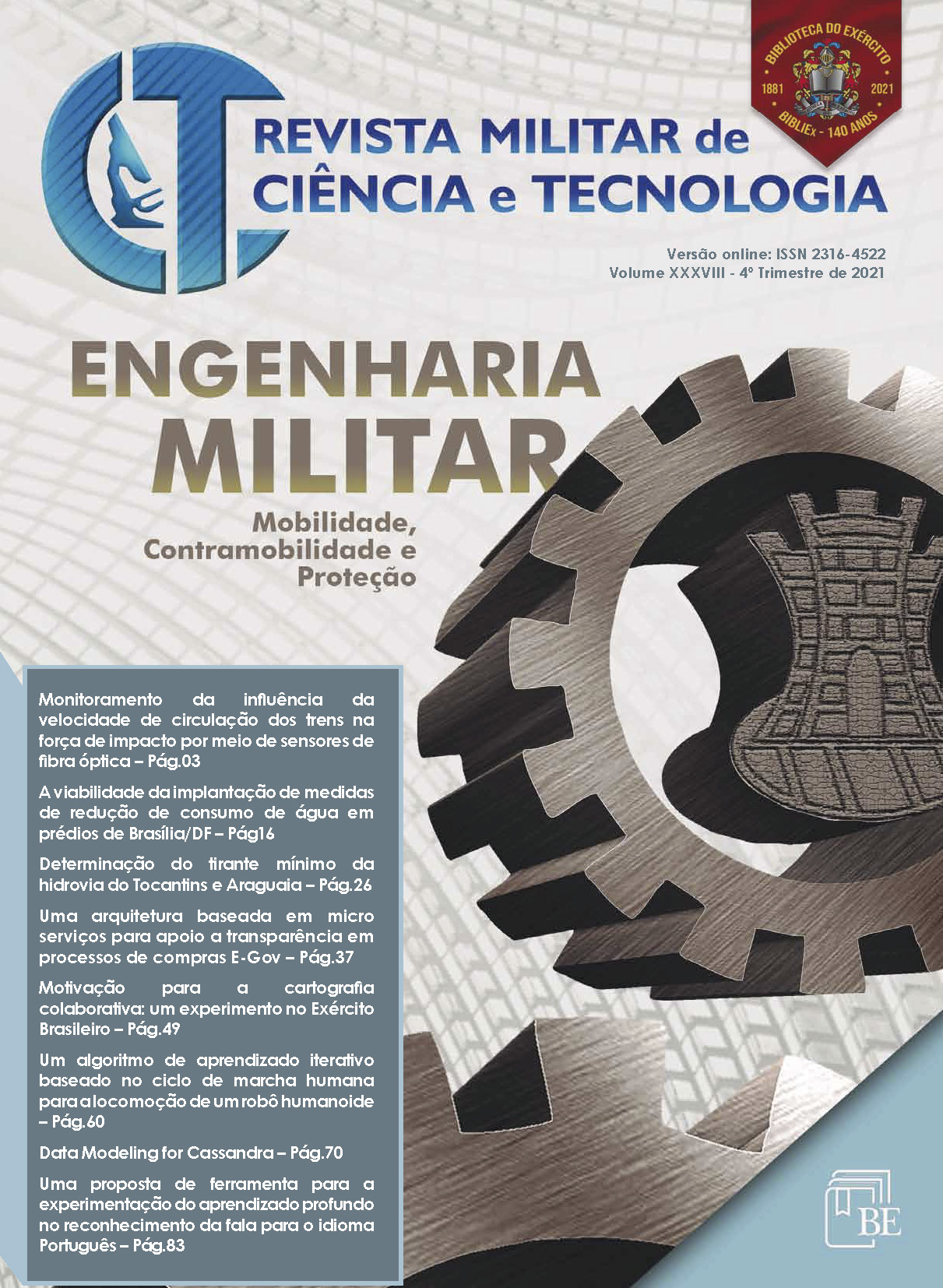
An iterative learning algorithm based on the human gait cycle for locomotion of a humanoid robot
Abstract
This paper shows an iterative learning algorithm that prioritizes static over dynamic stability to decrease gait complexity for an articulated humanoid robot. Initially, we have an array of goal positions, which the algorithm must achieve during the gait cycle. A trial and error process leads to the learning approach. Each robot motion attempt is available on an action list. At the moment the robot achieves a goal, the algorithm stores the sequence of movements in memory. When a failure happens, the action list provides the position just before the fall - and the process starts from that point onwards. In order to test the algorithm, we developed a simulator using Matlab Simulink, together with the Simscape Multibody contact forces library. We present the simulation data through graphs that describe the behavior of the joints during the learning process of a gait cycle.
Downloads
Downloads
Published
How to Cite
Issue
Section
License
A Revista Militar de Ciência e Tecnologia está licenciada:
A partir de 2022 sob as condições do Creative Commons (CC BY 4.0)
Até 2021 sob as condições do Creative Commons (CC BY-NC-SA 4.0)
Copyright: Os autores são os detentores do Copyright, sem restrições, de seus artigos.
As licenças estão informadas na página de acesso do artigo e são detalhadas a seguir:
Sob a licença CC-BY 4.0, você tem o direito de:
Compartilhar — copiar e redistribuir o material em qualquer suporte ou formato
Adaptar — remixar, transformar, e criar a partir do material para qualquer fim, mesmo que comercial.
De acordo com os termos seguintes:
Atribuição — Você deve dar o crédito apropriado, prover um link para a licença e indicar se mudanças foram feitas. Você deve fazê-lo em qualquer circunstância razoável, mas de nenhuma maneira que sugira que o licenciante apoia você ou o seu uso.
Sob a licença CC-BY-NC 4.0, você tem o direito de:
Compartilhar — copiar e redistribuir o material em qualquer suporte ou formato
Adaptar — remixar, transformar, e criar a partir do material
De acordo com os termos seguintes:
Atribuição — Você deve dar o crédito apropriado, prover um link para a licença e indicar se mudanças foram feitas. Você deve fazê-lo em qualquer circunstância razoável, mas de nenhuma maneira que sugira que o licenciante apoia você ou o seu uso.
Não Comercial — Você não pode usar o material para fins comerciais.
CompartilhaIgual — Se você remixar, transformar, ou criar a partir do material, tem de distribuir as suas contribuições sob a mesma licença que o original.
Sem restrições adicionais — Você não pode aplicar termos jurídicos ou medidas de caráter tecnológico que restrinjam legalmente outros de fazerem algo que a licença permita.
Aviso
Para qualquer reutilização ou distribuição, você deve deixar claro a terceiros os termos da licença a que se encontra submetida esta obra.